


Introduction
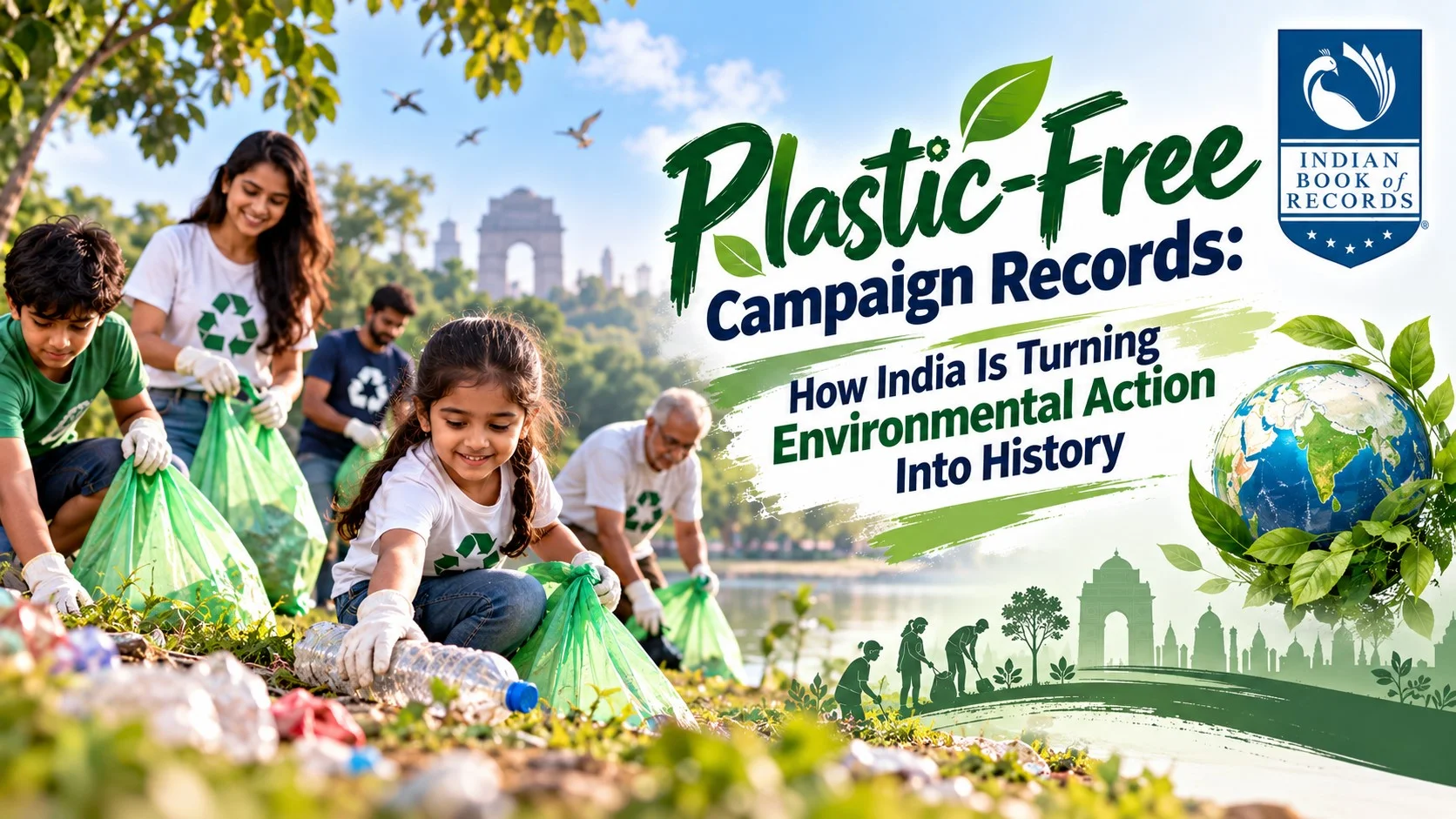
Plastic pollution is one of the biggest environmental challenges facing India today, and communities across the country are responding with a wave of grassroots action. From school drives to citywide clean-up marathons, plastic-free campaign records are becoming a powerful way to measure, celebrate, and multiply this impact. At Indian Book of Records, we've seen firsthand how documenting these achievements turns a single day of effort into a lasting milestone that inspires thousands more to join the movement.
In this blog, we'll explore what such an initiative really involves, why recording these efforts matters, some of the most notable environmental drives from around the country, and how your school, college, NGO, or organization can set an official record of its own.
What Is a Plastic-Free Campaign?
A plastic-free campaign is an organized effort — by an individual, institution, or community — to reduce, eliminate, or responsibly dispose of single-use plastic within a defined space or timeframe. This can include beach and lake clean-ups, plastic collection drives, awareness rallies, plastic-to-product recycling events, or pledges to switch to sustainable alternatives.
What separates an ordinary clean-up from a record-worthy plastic-free campaign is scale, consistency, and verified impact. Whether it's the number of kilograms of plastic collected, the number of participants involved, or the geographic area covered, these numbers are what transform a good deed into a documented achievement.
Why Plastic-Free Campaign Records Matter
Documenting a plastic-free campaign isn't just about bragging rights — it plays a real role in driving environmental change. Here's why:
1. Measurable impact drives motivation. When people see a number — say, 10,000 kilograms of plastic removed in a single day — it becomes tangible. Plastic-free campaign records give communities a clear benchmark to beat, which keeps the momentum going year after year.
2. Recognition encourages participation. Schools, colleges, and corporates are far more likely to organize large-scale plastic-free drives when there's a chance to be officially recognized. A record certificate adds credibility and prestige to an initiative, encouraging more volunteers to show up.
3. Records create a ripple effect. Once one institution sets a plastic-free campaign record, nearby schools, cities, or organizations often attempt to surpass it. This healthy competition has been one of the biggest drivers of large-scale environmental participation across India.
4. They build a permanent archive of environmental action. Every verified plastic-free campaign becomes part of a larger historical record — proof that individuals and communities took real, measurable steps toward a cleaner India.
Notable Plastic-Free Campaigns Across India
India has witnessed several inspiring, large-scale efforts to reduce single-use plastic:
Coastal clean-up drives in states like Maharashtra, Tamil Nadu, and Goa, where thousands of volunteers gather to clear beaches of plastic waste in a single coordinated event. These drives often run at dawn to beat the tide, with waste segregated on-site into recyclable and non-recyclable categories.
School and college-led plastic collection challenges, where students compete to collect and segregate the highest volume of plastic waste over a set period, often turning the exercise into an inter-house or inter-class competition.
Corporate and institutional pledges to eliminate single-use plastic from office campuses, often backed by measurable waste-reduction targets, cafeteria audits, and vendor policy changes.
Community river and lake restoration projects, which combine plastic removal with broader water-body conservation, involving local municipal bodies, resident welfare associations, and youth volunteer groups.
Market and vendor outreach programs, where local shopkeepers are encouraged to switch to cloth or paper bags, often supported by awareness pamphlets and public pledges displayed at the point of sale.
Each of these efforts has the potential to be recognized as an official record when properly documented, measured, and independently verified — turning a local drive into a nationally acknowledged achievement. What matters most isn't just the size of the event, but the accuracy of the data behind it — the exact weight of plastic collected, the verified headcount of participants, and the timeframe within which the activity was completed.
The Role of Technology in Documenting These Efforts
Modern environmental drives increasingly rely on technology to strengthen their claims. Weighing scales, GPS-tagged photographs, timestamped videos, and digital sign-in sheets are now standard practice for any organization hoping to have its plastic-free campaign records recognized. This shift toward data-driven documentation has made it easier for verification bodies to confirm claims quickly and has also improved public trust in the achievements being celebrated. For organizers, investing a little extra effort into proper documentation on the day of the event can make the difference between an informal clean-up and a nationally recognized milestone.
How to Start Your Own Plastic-Free Campaign
If you're planning to organize a plastic-free initiative — whether at a school, housing society, or corporate level — here's a simple framework to follow:
Define your goal. Decide whether you're focusing on plastic collection, awareness, or a switch to reusable alternatives.
Set a measurable target. Aim for a specific weight of plastic collected, number of participants, or area covered.
Mobilize your community. Involve students, employees, or residents through clear communication and simple, actionable tasks.
Document everything. Take photos, videos, and maintain a log of collected waste, participant counts, and timelines.
Get it verified. Submit your campaign details for official recognition to turn your effort into a certified plastic-free campaign record.
The Bigger Picture: Environmental Records as a Catalyst for Change
At Indian Book of Records, we track and celebrate achievements across categories — including environmental and social impact initiatives like plastic-free campaigns. Our platform's Global Challenges observatory tracks real-world data on plastic waste, ocean pollution, and household waste generation, underscoring just how urgent this issue really is. Turning individual and community action into an officially recognized plastic-free campaign record isn't just about certificates — it's about creating a permanent, credible record that motivates the next generation to act.
Recognizing these efforts also helps in a broader sense: it gives NGOs, schools, and institutions a compelling story to share with sponsors, media, and stakeholders, which in turn helps fund and expand future environmental work.
Common Mistakes That Cost Organizers Their Recognition
Even well-intentioned drives sometimes fail to earn official recognition. The most common issues include incomplete documentation, missing pre- and post-event weight measurements of collected waste, and a lack of independent witnesses to confirm participant numbers. Organizers should also avoid vague reporting — stating "a large amount of plastic was collected" carries no weight compared to an exact, verifiable figure. Planning your documentation strategy before the event, rather than scrambling for proof afterward, is the single biggest factor separating a successful submission from a rejected one.
It also helps to appoint a dedicated documentation team on the day itself, separate from the volunteers doing the physical clean-up. This team's sole responsibility should be to capture timestamps, collect signatures, weigh materials, and photograph the process from start to finish — ensuring nothing is missed once the event concludes.
Frequently Asked Questions
What counts as a plastic-free campaign record? A plastic-free campaign record is a documented, verified achievement — such as the largest plastic collection drive, highest number of participants in a clean-up, or most plastic recycled in a set timeframe — that meets specific measurable criteria for official recognition.
How can I get my plastic-free campaign officially recognized? You'll need to plan the event with clear metrics (participants, plastic collected, area covered), document it thoroughly with photos and videos, and submit the details through a records organization for verification.
Why should schools and colleges organize plastic-free campaigns? Beyond environmental benefit, these campaigns teach students responsibility, teamwork, and sustainability, while giving the institution a chance to earn public recognition and inspire other schools to follow suit.
Are plastic-free campaign records only for large organizations? No. Individuals, small communities, and local groups can set records too — scale matters less than the impact and how well the effort is documented and verified.
Conclusion
Every plastic-free campaign, big or small, is a step toward a cleaner and more sustainable India. But when that effort is documented, measured, and officially recognized, it becomes something more — a benchmark that inspires others to act, compete, and contribute. Plastic-free campaign records aren't just about numbers on a certificate; they represent the collective will of communities choosing a better future.
If you or your organization has taken part in a plastic-free initiative — or you're planning one — Indian Book of Records is here to help you document, verify, and celebrate that achievement.
Ready to turn your environmental effort into an official record? Set a Record with Indian Book of Records today.