

Sunday, 16, August, 2026

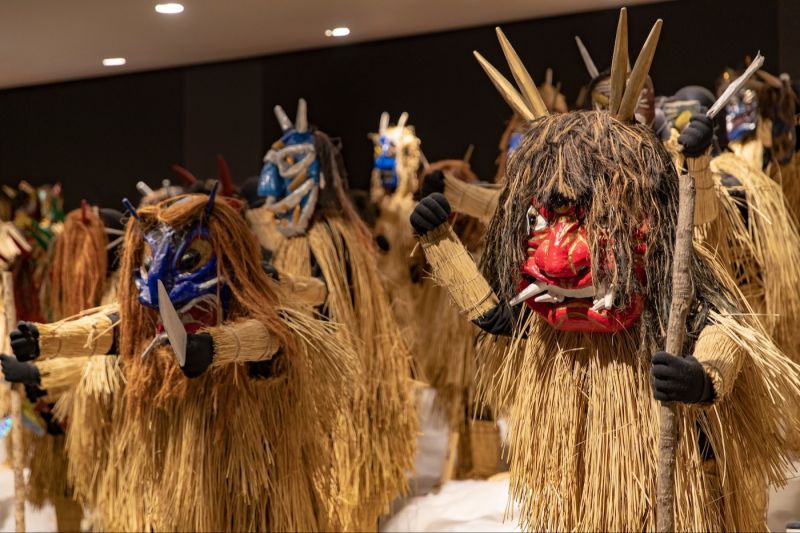
New Year’s Eve Traditions From Around the World
→

New Year’s Eve Traditions From Around the World
From Nation, For Nation - Pulse of the Nation
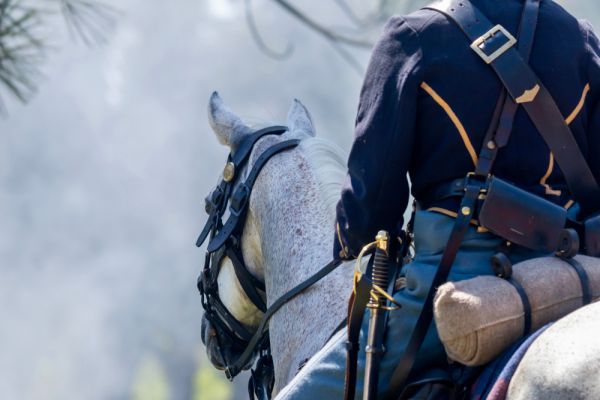
Minie ball bullets
Minie ball bullets

Was Civil War Surgery Really Performed Without Anesthetic?
Minie ball bullets often shattered bones, leaving no choice but to amputate.
Civil War Surgery
You’ve likely seen films where a Civil War soldier is being prepped for amputation and all he’s given to stave off the pain is some liquid courage and a bullet to bite into to silence his screams. While these men were tough as nails, they weren’t forced to stay awake and suffer while going under the knife. Both Union and Confederate field surgeons commonly used anesthesia to sedate their patients prior to amputation and other procedures.
War records show that doctors in the 1860s understand the importance of anesthesia during an operation and often relied on chloroform and ether to do the job. If neither substance was available, a surgery was put on hold.
American physician Crawford Williamson Long first used ether as an anesthetic in surgery in 1842. Nearly two decades later during the Civil War, 95 percent of operations involved the use of anesthesia. More than 80,000 operations occurred during the conflict, according to Union records. Of that number, just 254 were performed without an anesthetic.
Armies from both the north and the south manufactured chloroform and ether in their own medical laboratories. Chloroform was preferred because it required a smaller amount and was fast acting-it took effect in about nine minutes.
A doctor or assistant would put the chloroform on a piece of cloth shaped into a cone and place it over the patient’s nose and mouth, causing him to inhale the vapors. Surgeons used just enough anesthetic to prevent patients from feeling any pain, but it wasn’t uncommon for unconscious soldiers to groan or move around, requiring medical assistants to hold them down. Fortunately, these operations only lasted a few minutes.

Only rarely did a surgeon operate without using anesthetics. Some patients were so badly injured that they were already unconscious prior to surgery. Some doctors occasionally ran out of chloroform and ether due to military blockades. An even smaller percentage of old-school surgeons eschewed the modern practice of anesthesia.

Scholars estimate that during the three final years of the war, approximately 30,000 Union soldiers lost a limb, and 21,000 of them lived through the surgeries (which would have been excruciating without anesthesia). The Union Army did not keep records during the first year of the war, so the actual numbers are probably higher. It is unclear how many Confederate doctors performed similar surgeries because medical records were lost during a fire.

While this number of casualties may seem high, the ammunition at the time-large-caliber Minié ball bullets-had a propensity for shattering limbs into pieces. Doctors often elected to amputate rather than preserve an arm or a leg in order to avoid infections (antibiotics weren’t discovered for several more decades).
The majority of soldiers who underwent amputations survived. According to George Wunderlich, the executive director of the National Museum of Civil War Medicine in Frederick, Maryland, soldiers with below-the-elbow and below-the-knee amputations had a 75-85% survival rate.

The use of ether and chloroform in surgery eventually dropped off due to the creation of safer and more effective drugs. During the 20th century, the use of chloroform as an anesthetic fell out of use, particularly after it was revealed to be carcinogenic when ingested by laboratory mice and rats. Today, anesthesia is much more advanced. Surgeons can elect to put a patient to sleep during a procedure or use anesthetics to numb just one part of the body while the patient stays awake.
→

Four
Four

Those Four Small Words

Can Be Attributed To A 100-Year-Old Cartoon - Believe It or Not! turns 100!
Champs and Chumps
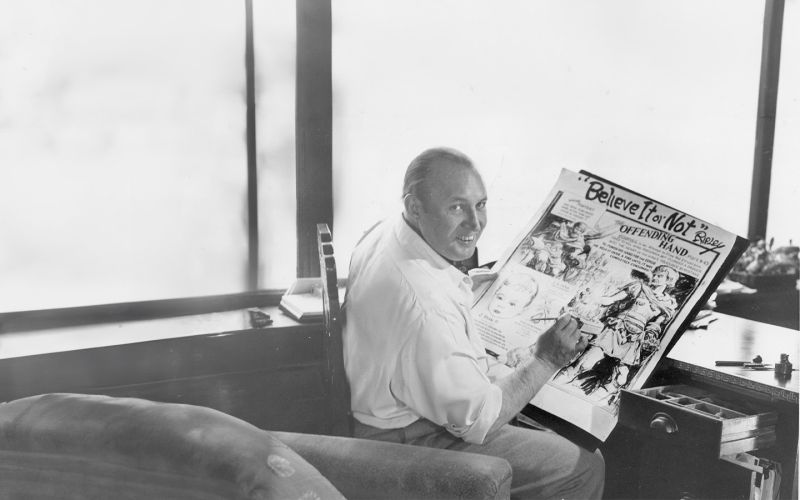
On December 19, 1918 - ONE HUNDRED YEARS AGO TODAY - the first “Believe It or Not!” cartoon was published.

On a slow news day, Robert Ripley pondered how to fill the space assigned to him as an illustrator for the New York Globe. He decided to return to an old concept that he’d experimented with back in the winter of 1916. Little did he know, the choice he was about to make would be the start of an amazing adventure that lives on today.
→
From Globe, For Globe - Pulse of the Planet
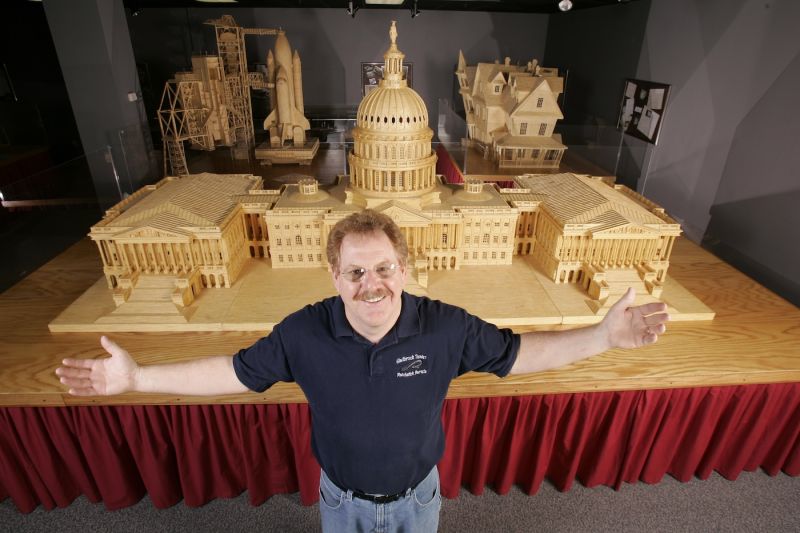
Intricate Masterpieces
Matchstick Art: Crafting Intricate Masterpieces

From flying trains to Hogwarts castle Ripley's matchstick art collection remains unmatched.
Matchsticks, simple, everyday objects, are usually meant to spark a flame. But in the hands of a visionary artist, they can ignite something even more powerful: imagination.

The Intricate World of Matchstick Art
Matchstick art is a meticulous craft in which thousands-sometimes millions-of tiny wooden sticks are transformed into jaw-dropping creations. Artists use matchsticks to build everything from miniature landmarks and fantasy castles to full-sized machines and detailed sculptures.
One of the most astonishing examples in Ripley's collection comes from artist Pat Acton.

Planes, Trains, and Automobiles
Master matchstick artist Pat Acton has added no shortage of unbelievable creations to the Ripley's collection.
From a train constructed with over 1,000,000 matchsticks to a half-sized Dodge Charger, Acton is the living embodiment of thinking outside the box.
Believe It or Not!, Acton's locomotive model-known as Plane Loco-took 14 months, 3,000 hours, and 35 gallons of wood glue to complete.
Plane Loco is more than a static sculpture. It features interactive controls, including a working throttle, brake, and forward levers. It even has whimsical wings, inviting visitors to imagine flying or riding in this one-of-a-kind machine.

Built One Matchstick at a Time
What makes matchstick art so remarkable isn’t just the final product-it’s the process. Every single stick is carefully placed by hand. Some are cut, bent, or sanded to fit just right. The craft demands intense focus, creativity, and an eye for design.
Pat Acton has spent years pushing the boundaries of matchstick construction, creating everything from fantasy castles and dragons to ships and even spaceships-all crafted from humble matchsticks.
Acton has even brought the wizarding world to life with a matchstick recreation of Hogwarts School of Witchcraft and Wizardry, made famous by J. K. Rowling’s Harry Potter series. The sculpture took three years to complete and is composed of over 500,000 matchsticks.

Back to the Future... in Matchsticks
But that’s not all! Acton has recently recreated the entire setting of the 1985 film Back to the Future!
This massive model showcases the town square of Hill Valley, California, just as it appeared when Marty McFly traveled back to 1955. Pat spent just over two years building this detailed diorama, complete with interactive features.
With the push of a button, the time-traveling DeLorean speeds down the street. Lights flash, thunder rumbles, and the whole model springs to life-mimicking the iconic scene where Marty returns to the year 1985.

Small Pieces. Big Possibilities.
From miniature wonders to massive builds like Plane Loco, matchstick art reminds us that even the smallest materials can be used to create something extraordinary-one stick at a time.
So what are you waiting for? Visit Ripley's Believe It or Not! Gatlinburg and witness the Hogwarts matchstick model up close and personal!
→

Referred by ripleys.com - where the world’s most extraordinary stories are discovered and celebrated.