


The Strange Truth About the St. Patrick’s Day Shamrock

From Nation, For Nation - Pulse of the Nation
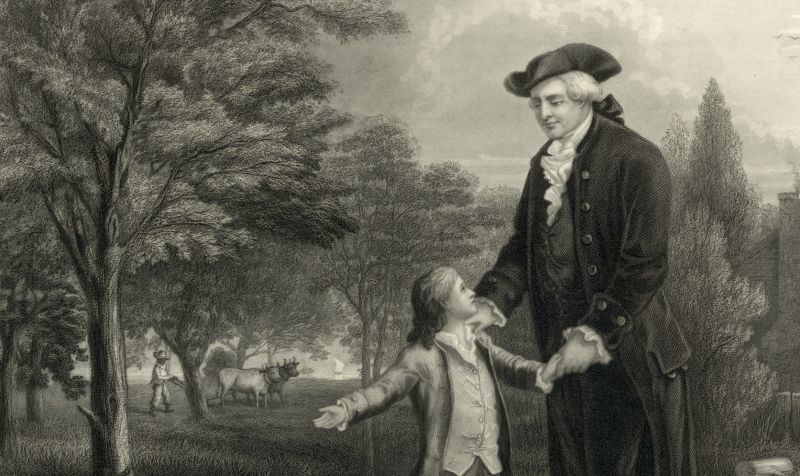
George Washington’s Cherry Tree Tale Debunked
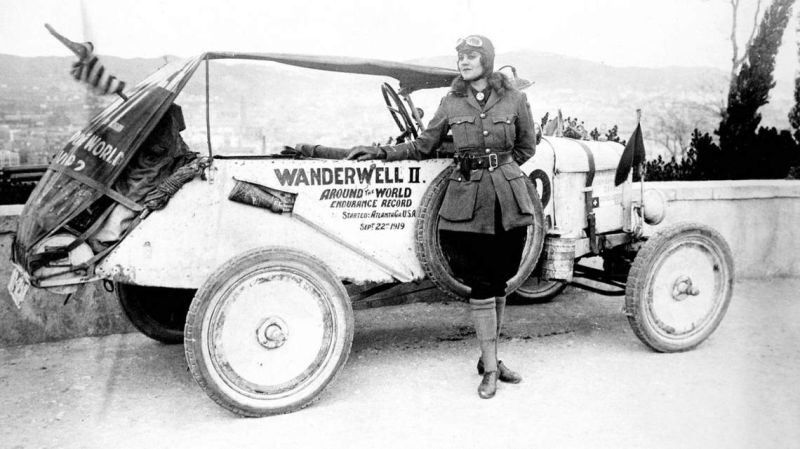
The Mysterious, Intrepid Aloha Wanderwell
Aloha Wanderwell
Aloha Wanderwell loved record breaking. In the 1920s, she traveled 380,000 miles across 80 countries becoming the first woman to circumnavigate the globe in a Ford Model T. Just 16 years old at the time, the epic journey took seven years to complete. A female Indiana Jones, she was the first woman to fly Brazil’s Mato Grosso and document the Bororo people of Brazil.
But the Canadian-American explorer’s life swirled with scandal and mystery. Her husband’s murder aboard a yacht remains one of the greatest cold cases in US history. Aloha earned the nickname “the Rhinestone Widow” because of her emotionless demeanor. Read on to learn more about this figure of controversy, self-invention, and legend.
Answering the Call to Adventure
Aloha was born Idris Galcia Welsh on October 13, 1906. She grew up on a steady diet of adventure tales by W.H.G. Kingston, Rudyard Kipling, Edgar Rice Burroughs, and more. Her stepfather died in combat at Ypres in 1917. Aloha and her sister were sent to a strict French convent school. Meanwhile, her mother visited the front searching in vain for her husband’s body. In the convent, Aloha chafed against its self-denying rigors. She longed to run away, to explore the world she’d read so much about.
By 1921, “Captain” Walter Wanderwell (né Valerian Johannes Pieczynski) made adventure his calling. Competing in the Million Dollar Wager-a global endurance car race-Walter determined to win by visiting the most countries of any team. Known affectionately as “Cap” by his friends, Walter was a controversial figure. He served time in US federal prison during World War I as a suspected German spy. But that didn’t stop the media from falling in love with his life of wanderlust.
By 1922, Walter needed a French translator, driver, and secretary for his Million Dollar Wager. He placed a newspaper announcement advertising for, “Brains, Beauty & Breeches-World Tour Offer for Lucky Young Woman…. Wanted to join an expedition… Asia, Africa…” Aloha answered the call, charming her way into Walter’s party.
Driving Around the World
Walter rechristened Idris, Aloha Wanderwell, and she became the star of his expedition. Each endurance team funded their trip through public speaking, the sale of souvenir pamphlets, and screenings of films they made en route. Ironically, the Wanderwell Expedition’s main competition came from a team led by Walter’s ex-wife, a Broadway chorus girl named Nell. Talk about awkward!
Besides acting as translator, secretary, and driver, Aloha took on the duties of actress, photographer, cinematographer, salesperson, vaudeville performer, film editor, interpreter, negotiator, and even mechanic. Over the course of seven years, the public grew weary of the Million Dollar Wager, but Aloha kept the adventuring spirit alive with her charisma and good looks.
The expedition proved grueling. Aloha used crushed bananas to grease the differential, elephant fat as engine oil, and kerosene as gasoline. The Wanderwell Team “won” the competition as a result of Aloha’s moxy and marketing. She later chronicled-and exaggerated-the exploits of the Wanderwell expedition in her book Call to Adventure (1939).
Breaking Records in Brazil
During the Wanderwell Expedition, Aloha and Walter fell in love. They married on the American leg of their journey. In 1929, they released the silent film With Car and Camera Around the World making them international exploring sensations. Aloha gave lectures describing their harrowing journeys along to screenings of the movie. They had two children together, Nile and Valri.
But marriage and motherhood didn’t slow Aloha down. Between 1930 and 1931, Aloha and Walter piloted a German seaplane to the uncharted Mato Grosso in Brazil. Setting up camp in Descalvados Ranch in Cuibá, their goal was finding the missing explorer Colonel Percival Harrison Fawcett’s Lost City of Z-aka the legendary city of Eldorado.
But when their plane ran out of fuel on the Paraguay River, the pair had to split up. Walter trekked out of the Amazonian Basin in search of help. Aloha stayed behind with the Bororo tribe. Through ingenuity and charm, she earned their trust and created films documenting their daily life. Unbeknownst to her, these reels constituted the first film footage ever taken of the tribe. After her rescue and return to the United States, Aloha edited and released the 32-minute silent film Flight to the Stone Age Bororos.
The Murder of Captain Wanderwell
The Wanderwells’ journey together came to an end in late 1932. On December 5, the day before another departure to South America, Walter was shot in the back by an unknown assailant. The murder occurred aboard his 110-foot yacht, the Carma, anchored in a harbor near Long Beach, California. Two suspects were named by police, William James Guy and Edward Eugene Fernando Montague, the Duke of Manchester’s son. Guy would later be charged with murder.
Guy, a member of the Wanderwells’ 1931 expedition to South America, despised Walter for swindling him out of money and ruining his marriage. Guy’s trial caused a media frenzy. Yet, a jury eventually acquitted him.
Many speculated Guy’s good looks and easygoing charm swayed the jury. Truth be told, Walter’s womanizing ways and shady money dealings had earned him quite the reputation as a scam artist. The line of those who wished to murder him was long. But did it include Aloha?
While never named as a suspect by police, Aloha’s strange behavior following her husband’s death left a pall on her character. Detached and unsurprised by the news, police wondered if she’d had foreknowledge of the murder plot. Her emotionless demeanor made her “the Rhinestone Widow.” In 1933, her rushed marriage to Walter Baker, one of Walter Wanderwell’s former cameramen, further tarnished the public image she had so carefully crafted during the 1920s.
The Legacy of Aloha Wanderwell
Aloha continued to travel and document her journeys with the help of her second Walter. But the notoriety associated with her first husband’s unsolved murder stayed with her for the rest of her life. Known as “the world’s most traveled girl,” Aloha carefully preserved her journals, photos, films, and artifacts of her journey for the rest of her life. She passed away on June 4, 1996, in Newport Beach, California.
→
From Globe, For Globe - Pulse of the Planet
How long can a contestant keep a ferret in their pants?
Animal Athletics
The animal kingdom boasts some very impressive athletic abilities. They are incomparable to even the fastest, strongest, fiercest human. Even Usain Bolt could not outrun your average house cat, who can reach nearly 30 miles per hour with no grueling training. But, when you have man and beast competing together you get greatness-and some of the world’s weirdest sports.
Ferret Legging
Ferret legging is a test of endurance…or simply the ability to have your bits bitten and do it with a smile. Also known as ferret-down-trousers and put ‘em down, competitors must place two live ferrets down their pants, which are tied at the ankles and belted tightly at the waist. The competitor, going commando, then stands before judges, enduring the misery of the ferrets’ razor-sharp claws and teeth. The person who stands the longest wins.
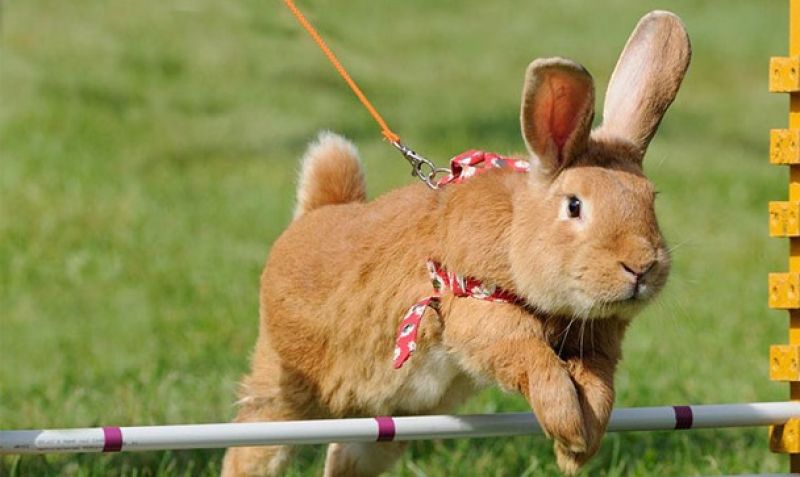
Kaninhop
Kaninhop was invented in Sweden in the early 1980s and involves adorable bob-tailed bunnies bouncing their way around obstacle courses consisting of several jumps of varying height and length.
Worm Charming
Each year, the small English village of Willaston hosts the World Worm Charming Championships, where competitors convince as many worms as they can to rise to the Earth’s surface. Also known as fiddling or grunting, coaxing earthworms is no easy task. While the exact method differs from wormer to wormer, the basic idea is to create vibrations in the ground.
Pigeon Rolling
Parlor roller pigeons are a flightless breed of pigeon that can roll and somersault backward at great speeds across the ground, traveling hundreds of feet. Like a gymnast’s floor routine, these birds compete and are judged on factors like their form and appearance. Rolling 200 to 300 ft. is considered good, but the record is a lengthy 662 feet!
Makepung
Makepung is a unique buffalo racing tradition that originated in Bali, Indonesia. Enjoyed by the Kaliakah Villagers, buffalo pairs are teamed together with their jockeys for a wild ride—saddling up wood plows to take on 125 meters of wet rice fields! Makepung translates to “romp” in English, but this fierce competition is far from that!
Now, go wake up your ferret (they sleep for about 20 hours a day!) and let’s get to business (a group of ferrets is called a business). You could be a champion ferret legger and not even know it! Know of any other Olympic-worthy critters? Let us know in the comments!
→

Referred by ripleys.com - where the world’s most extraordinary stories are discovered and celebrated.