


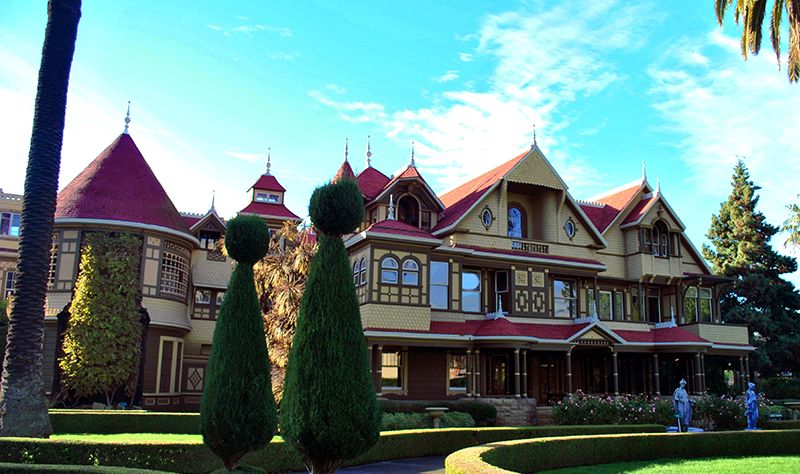
We Welcome You to the Winchester Mystery House
From Nation, For Nation - Pulse of the Nation
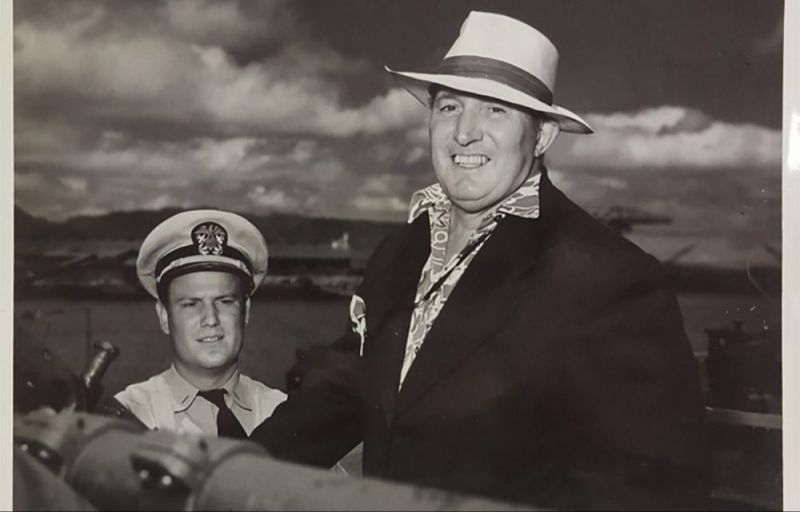
What Do North Carolina, Robert Ripley and Pearl Harbor Have in Common?
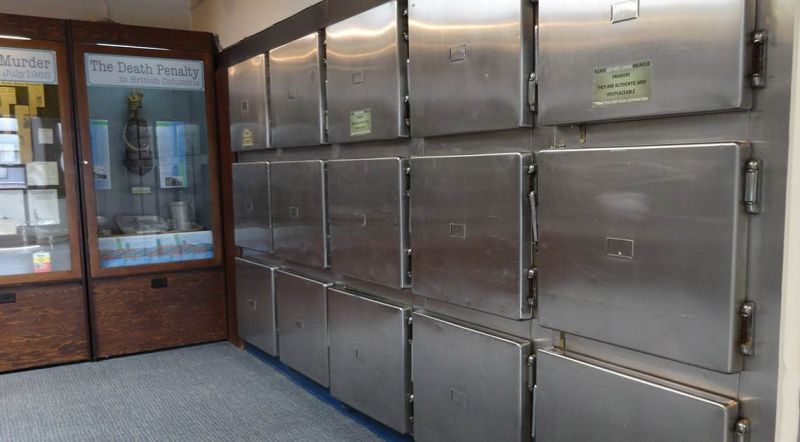
The Vancouver Police Museum Has Its Own Morgue
The Vancouver Police Museum
They call it an arresting experience.
See-it’s a pun. Because it’s a police museum. And it’s got a ton of crazy stuff there, like thousands of police artifacts, photos, and documents. It’s been entertaining people by showing them the dark side of Vancouver since it opened in 1986, which marked the centennial of the city’s police force.
Welcome to The Vancouver Police Museum.
Located in an 85-year-old building that used to be a functioning morgue, you can now find an exhibit dissecting the town’s most famous murders (see what we did there? Dissecting?) or another exhibit depicting the ways in which a person can die (the props include a real human brain with a bullet hole in it).
The nonprofit runs on about $200,000 a year and attracts more than 15,000 visitors annually. It’s even been used in an episode of The X-Files.
One room contains all the weapons confiscated by the force over the past decades. You’ll see everything from guns to knives, brass knuckles to bats-and, of course, a few stranger objects too. One looked like two bowling balls with spikes coming out of them attached to a chain.
Then there are the skulls from the Babes in the Woods case.
In 1953, the skeletons of two young children (two boys between the ages of 6 and 10) were found in Stanley Park. Also nearby was a shoe, a lunch box, and other items. It was thought the children had been bludgeoned to death seven to nine years earlier with a hatchet that was found in the area.
The case went, as they now say, viral.
And now, on display in the museum, are the skulls, along with more bones and the hatchet that killed them. The case remains unsolved.
Visitors can also wander into a room that perfectly resembles the one where Errol Flynn (who portrayed Robin Hood on the big screen in 1938) had his autopsy in 1959. After traveling to Vancouver to sell his yacht, Flynn was found dead in a penthouse in the West End.
When it came time for the autopsy, the local pathologist found warts on Flynn’s private area, so he cut them off for examination. That proved to be a problem, as Flynn’s body was also scheduled to have a second examination back in Los Angeles.
It is rumored that the pathologist was told to put the warts back on Flynn, so that’s what he did. He reattached the warts-using tape.
In another story involving pathologists, there is a perfectly round bullet hole in a nearby glass window.
As the story goes, a pathologist was working one night to determine the death of a body, and he suspected foul play. Just then, a shot came through the window, narrowly missing the pathologist. It was later discovered that the shot came from the man who’d killed the victim. He was trying to kill the pathologist to further cover-up his crime.
Before leaving, everyone should try the sketch artist station, where folks can climb up and try their hand at sketching themselves or someone else. Don’t worry—you’re using a computer, not going freehand.
Remember: if you’re making a visit to The Vancouver Police Museum today, there’s no need to be frightened.
The only time to worry was if you made a visit 85 years ago—back when it was a working morgue and you’d come in on a slab.
→
From Globe, For Globe - Pulse of the Planet

As it turns out, there are a few other scenarios that could spark a hallucination in a person’s mind. One of those is sensory deprivation.
Sensory Deprivation & R.E.S.T
Perhaps you think that hallucinations only occur due to the effects of drugs or because of mental illness. As it turns out, there are a few other scenarios that could spark a hallucination in a person’s mind. One of those is sensory deprivation.
It’s Noisy Out There!
In today’s world, it is almost impossible to escape the stimuli of the senses. The sounds of the city, the smell of the mixture of aromas found in your home or office, the taste of your lunch, the feel of everything you come in contact with, as well as the sight of all these things and more.
So how would it be possible to experience sensory deprivation? Well, there are some specialized rooms similar to those used for solitary confinements that are devoid of light and sound. The use of these rooms can be controversial due to allegations that they have been used to torture prisoners of war, making them more suggestible to their captor’s wishes.
Six People and 48 Hours in Silence
A documentary study filmed by BBC put six volunteers in such a room for 48 hours and found that the majority experienced hallucinations, paranoia, and showed higher signs of suggestibility after leaving the room.
In another study by Dr. Oliver J. Mason, who studied the effects of short term sensory deprivations, it was shown that just 15 minutes of sensory deprivation could still lead to side effects such as hallucinations, depression, and paranoia. When you are experiencing thoughts inside your head, your brain confuses whether those thoughts originate from inside your mind or outside, ergo, hallucinations.
Faulty Source Monitoring
The reason we hallucinate in times of sensory deprivation is due to what researchers call “faulty source monitoring.” This occurs when the brain misinterprets the source of what it is experiencing.
R.E.S.T. – Restricted Environmental Stimulation Therapy
A new trend in today’s world is known as Restricted Environmental Stimulation Therapy, or REST. In this type of therapy, it is thought that sensory deprivation can be used to induce a relaxed state of mind.
This therapy is done using Chamber REST, which involves lying on a small bed in a dark sound proof room, and flotation REST, in which you float in a pool of salt water in an equally dark and soundproof tank. These tanks supposedly help improve creativity, performance on tasks requiring high concentration, stress levels, and stress related health disorders.
What Does This Mean For Us?
Further research is needed in order to better understand and determine the effects of REST or any other form of sensory deprivation. Although REST and the studies mentioned above have different objectives and somewhat different outcomes, they all rely on depriving the senses of stimuli. Whether sensory deprivation leads to depression and paranoia, or whether it can be a healthy way to relieve stress is still a bit unclear. Perhaps you may want to try it for yourself to find out.
→

Referred by ripleys.com - where the world’s most extraordinary stories are discovered and celebrated.