


Ants vs. Humans: Who Would Win a Tug-of-War?

From Nation, For Nation - Pulse of the Nation

The Scariest Halloween Monsters and Their Origin Stories
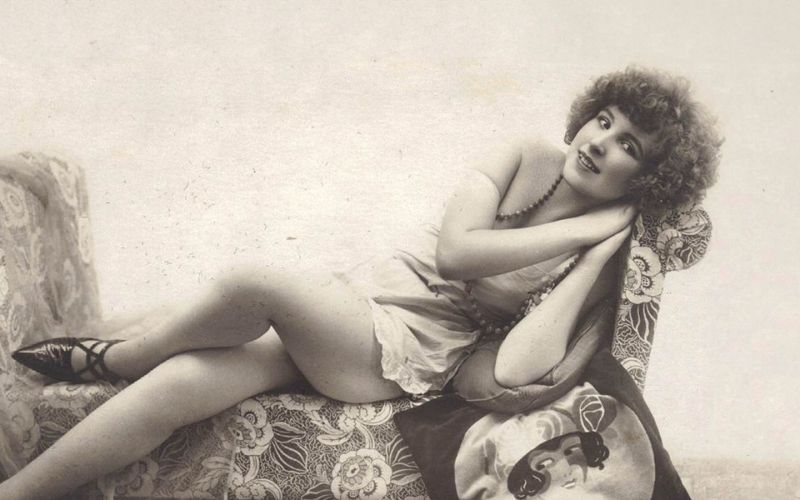
The Early Origins of Temporary Tattoos: Hand-Painted Knees
A temporary tattoo of a whimsical whale from a Cracker Jack box would hardly turn a head in 1912, but a portrait painted by hand on a woman’s knee in the ’20s? Now that was scandalous.
Temporary Tattoo History
According to the Tattoo Archive, the origins of temporary tattoos have faded with time. Cracker Jack started making their now-famous “A Prize in Every Box” line in 1912, but it’s unclear when the company started including ink. Temporary tattoos didn’t really take off until the ’50s, and those early ones were made with food coloring and quickly washed off. The temporary tattoos on the plastic sheets that we’ve all come to know weren’t invented until the 3M Company created the technology in the 1980s. Could it be, then, that flappers were early trailblazers of temporary tats as we know them?
Don’t Forget About Henna
The answer is that it’s certainly possible that flappers influenced the temporary tattoo trend in the Western world! However, it’s important to note that the first-ever temporary tattoos were likely henna or Mehdi art. This art form has a deep history in cultural and personal expression for people in Egypt, Pakistan, India, Africa, the Middle East, and more. But it didn’t become popular in the U.S. until the 1990s!
Dramatic Flapper Makeup
Women were getting bored with being Gibson Girls-those idealized versions of women with hair piled atop their heads and gowns reaching the floor. With the recent end of World War I, the roaring ’20s saw a boom in women’s desires to shake off their dainty and reserved personas and to celebrate life! The Jazz Age kicked off, and clubs were filled with a Gatsby-esque buzz. While the term flapper was originally an insult to a woman’s modesty, independent women embraced it. Flappers donned dramatic dark makeup, defined their lips, and chopped their long strands.
Rouging Your Knees
It’s hard to imagine a time when showing your ankles was saucy, but in the times of flappers, the hemline of skirts and dresses had only raised to calf-length. A flash of a knee was not a common sight, so dancers would put blush, or rouge, on their knees. When they lifted their hem with the pop of a kick, all eyes were on the pink-hued knees for a moment.
Painted Patellae
Women stopped wearing garters to hold up their pantyhose and instead began rolling them down below the knee. With a shorter hemline and a blank kneecap, flappers began painting pictures on their legs. Some used makeup, but many used actual paint and even enlisted artists to help. They would adorn their knees with flowers, portraits of their boyfriends, or detailed landscape scenes.
Most men and older women thought the trend was immature or too provocative. Interviewed for a Maryland paper in 1966 called “The News,” a man named James A. Rice said that cosmetic knees were “more childish than anything else.” Another man said, “I like to see just plain legs.” But rebellious teens joined in on the fun as well. Members of a Baltimore high school basketball team were almost expelled for painting portraits of their boyfriends on one knee and an image of a flapper on the other to bring them good luck during a game.
On-the-View Knees
Temporary tattoos were sold on sheets in the ’50s, and just after, the painted knee trend saw another resurgence in the ’60s. Famous makeup brands started selling kits to create the knee art yourself, like Faberge’s “Madcap Kneesies for on the View Knees.” This lesser-known knee painting trend of detailed tattoo-like imagery, fun florals, portraits, and even depictions of boxers may well have helped spark interest in temporary tattoos as we think of them today.
→
From Globe, For Globe - Pulse of the Planet

Santa rocked red before Coca-Cola ever came on the scene.
Back in 2007, a controversy the size of Santa’s jelly belly rocked the world. Claims were made that Claus wears his iconic scarlet apparel because it’s the same color as Coca–Cola’s branding. Yikes! The thought of explaining to starry-eyed youngsters that Jolly Old Saint Nicholas wears red because of soda “Mad Men” filled many parents’ hearts with dread.
Fortunately, a little Christmas history reveals everybody’s favorite giant elf has been sporting shades of ruby, vermilion, and burgundy since the 1860s, about 70 years before Coca-Cola developed its iconic image of St. Nick.
Read on to find out more about the evolution of the North Pole’s most famous resident and Coca-Cola’s actual role in the cultivation of his image.
Santa’s Origins
In 2008, Phil Mooney-director of Coca-Cola Company’s Archives Department-set the record straight about Santa’s brightly-colored garb. Mooney explained, “Actually, we do not claim the color of Santa’s coat, though it has worked out well for us since red is so closely related to Coca-Cola! But we did not come up with the idea of putting Santa in red clothes.”
Santa has worn his traditional red outfit since the mid-19th century. How do we know? Thanks to an 1868 advertisement for Sugar Plums by the US Confection Company of New York. What’s more, illustrations by the “Father of the American Christmas card,” Louis Prang, also depict him in his now-famous attire. Famed political cartoonist, Thomas Nast, played a crucial role in “fleshing out” Santa’s plump physique and providing him with all of his trappings. But he dressed him in many different colors.
Prang and Nast both hailed from Germany, which shouldn’t come as a surprise. Many of the longest-held traditions celebrated during the Yuletide come from Germanic Europe, including Advent calendars, gingerbread houses, and Christmas trees.
As for the concept of Santa Claus? He’s based on a flesh–and–blood 4th-century Greek hero, St. Nicholas, the patron saint of children. Originating in what is modern–day Turkey, Nicholas earned a reputation for secret gift–giving. His generosity included putting coins in shoes left out for him. And he gifted three impoverished sisters with dowries so they could get married instead of becoming prostitutes. (Have fun explaining that one to your kids!)
Santa’s Pictorial History
The first pictorial images of St. Nicholas were religious icons. A great example is the 13th-century St. Nicholas “Lipensky” Russian icon from Lipnya Church of St. Nicholas in Novgorod. Over time, the saint’s image slowly transformed, as did his name. Santa Claus is a derivative of the Dutch Sinterklaas, an abbreviation of Sint Nikolaas. The Dutch also pictured him riding a white horse across rooftops while carrying a staff. Why rooftops? Because that’s where his minions lurked, eavesdropping at the chimneys of houses with kids.
These rooftop legends also link Santa Claus to the Norse god Odin who judged good and bad kids. Doesn’t that beard look a little Odin-like to you? By the 17th century, Santa used a variety of titles from Sir Christmas to Lord Christmas and Old Father Christmas, and he started wearing fur-trimmed robes. Whether or not these robes were red is up for debate as the illustrations were black-and-white engravings.
By the 19th century, as Dutch, German, and British immigrants to the US continued to mingle, so did their rich traditions surrounding Santa. By the 1860s, Thomas Nast’s illustrations depicted Santa with his reindeer and a sleigh. What’s more, Nast made him jolly and pipe-smoking. But he dressed him in a wide variety of outfits, from head-to-toe yellow to star-and-stripe patterned suits. Although he didn’t necessarily wear red, Nast’s images of Santa are highly recognizable to this day.
A Nast drawing of Santa from 1863.
Coca-Cola and Santa
It’s safe to say that the modern images we associate with Santa Claus reached recognizable maturity by the 1860s and 1870s thanks to artists like Louis Sprang and Thomas Nast. As for Coca-Cola? It was invented in 1886 by Dr. John S. Pemberton, an Atlanta pharmacist. The company wouldn’t start advertising with Santa until the 1930s.
Nevertheless, when Coke’s advertising guru, Archie Lee, hired Haddon Sundblom to create fresh images of Saint Nicholas, Lee hit marketing gold. Sundblom’s gorgeous illustrations from 1931 to 1964 helped codify our image of Santa today. But it’s important to note he drew inspiration from previous artists as well as Clement Clarke Moore’s poem, “A Visit from St. Nicholas,” a.k.a “’Twas the Night Before Christmas.”
→

Referred by ripleys.com - where the world’s most extraordinary stories are discovered and celebrated.