


5 Mind-Blowing Reasons to Visit Ripley’s Grand Prairie on Your Next DFW Adventure
From Nation, For Nation - Pulse of the Nation

How Long Does It Actually Take to Digest Swallowed Gum?
The Greatest Misquotes in History
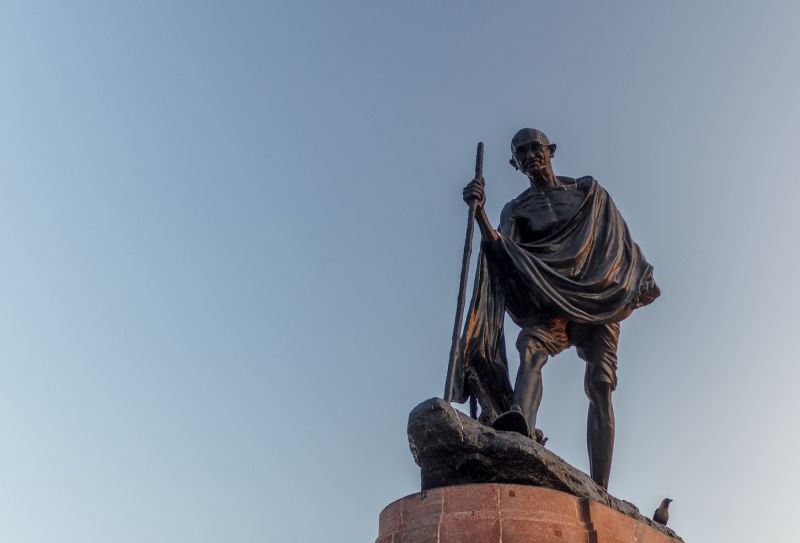
This short, pithy quote has long been attributed to Gandhi, and although the message sounds right, the words don’t exactly sound like his. The New York Times states that the closest quote we have to this that we know was said by Gandhi is, “If we could change ourselves, the tendencies in the world would also change… We need not wait to see what others do.”
Machiavelli: “The Ends Justify the Means.”
Machiavelli certainly had this attitude in mind when he wrote his 16th-century political manifesto The Prince. Still, he didn’t actually say it, and instead, a similar quote we do have attributed to him is less ruthless: “One must consider the final result.” Another, almost identical quote can be attributed to the poet Ovid who wrote in Heroides: “The result justifies the deeds.”
Neil Armstrong: “That’s One Small Step for Man, One Giant Leap for Mankind.”
This one’s a bit weird and complicated. Neil Armstrong is often quoted as having said, “That’s one small step for man…” which, grammatically, is not what he meant to say. In this sense, the word man represents the same idea as mankind, making the quote kind of wonky.
However, Armstrong swore for years that he said the words “a man” and that people were unable to hear the word “a.” Over time, he relented, saying he might have misspoken simply because he was nervous, but in 2006, a computer programmer actually analyzed the audio and stated that the word “a” was, in fact, said.
Marie Antoinette: “Let Them Eat Cake!”
Marie Antoinette never actually said this. Instead, it came from a book titled Confessions by Jean-Jacques Rousseau, which was published in 1782-11 years before Marie Antoinette was executed. Also, the line was “Let them eat brioche,” a kind of heavy, bread-like French pastry. It’s likely the attribution to Marie Antoinette occurred because the people of France were highly incensed with the Royals, and the belief simply fueled the flames of revolution.
Gloria Steinem: “A Woman Needs a Man like a Fish Needs a Bicycle.”
Gloria Steinem herself actually credits Australian writer Irina Dunn with this phrase, which Dunn says she wrote on the door of public bathrooms when she was a student in the 70s. According to Steinem, the quote is directly related to the witticism: “God needs man like a fish needs a bicycle.”
Marilyn Monroe: “Well-behaved Women Rarely Make History.”
Marilyn Monroe never said this. Instead, it was a quote from writer and Harvard professor Laurel Thatcher Ulrich. In addition, the wording used was “Well-behaved women seldom make history.” Ulrich penned the quote in 1976 and wrote a book with the same title in 2007.
Oscar Wilde: “Be Yourself; Everyone Else Is Already Taken.”
Although this sounds exactly like something Wilde himself would say, these words are never actually a part of any of his writings. He has similar quotes, however, that we can certainly attribute to him, and one is this: “Most people are other people. Their thoughts are someone else’s opinions, their lives a mimicry, their passions a quotation.”
Patrick Henry: “Give Me Liberty or Give Me Death!”
Patrick Henry’s 1775 speech at the Virginia convention wasn’t written down, so we have no record of what exactly he said on that day. The quote comes from William Wirt’s biography of Henry, which he wrote in 1817, and which was widely discredited by his peers like Thomas Jefferson. In addition, the famous quote is also very similar to one from a play written in 1712: “It is not now time to talk of aught/But chains or conquest, liberty or death.”
→
From Globe, For Globe - Pulse of the Planet
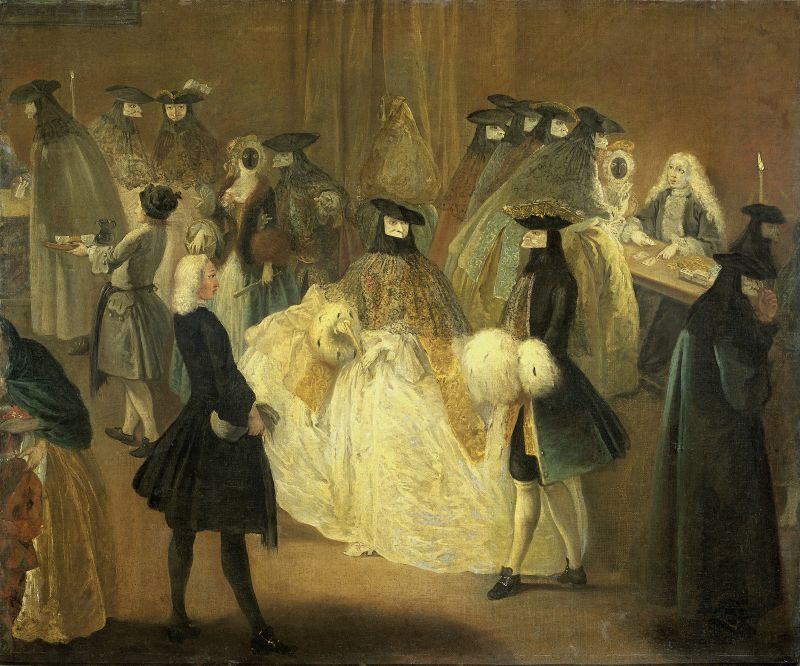
They looked decidedly eerie, almost appearing as though someone had cut out the person's face.
If you’ve been invited to a masquerade ball this year and want to wear something that screams “creepy-casual,” consider adding a moretta to your ensemble.
Old School Sunscreen
When we think of carnival masks of Venice, Rio, or New Orleans, we think of bright colors and ornate designs. But, if you go waaaay down to the opposite end of the spectrum, you’ll find the moretta, a woman’s mask of plain black with no sparkle or flare, and no opening for the nose or mouth. In artists’ depictions, they look decidedly eerie; it almost appears as though someone has cut out the person’s face.
Of all the styles of masks worn at the time, the moretta was as sleek and simple as could be. Likely made of a material like cardstock or cardboard. It would have been waxed, painted over, or had black fabric affixed to it for a blank effect.
Popular in Paris and Venice during the mid-to-late 17th century, the moretta was an oval-shaped, black mask of French origin. It disguised the lady who wore it. It also stayed put with a button held between the teeth, rendering the wearer mute. It’s no wonder the moretta, meaning “dark,” was also sometimes called the “servetta muta,” or “mute servant.”
From the late 1600s until about 1700, women in Paris had a tradition of covering their faces in public. “Women didn’t always wear hats, so they used masks, including the moretta partially to keep their fashionably pale skin safe from the sun,” says James H. Johnson, Professor of History at Boston University and author of Venice Incognito: Masks in the Seren Republic.
The plain, dark mask accentuated the paleness it helped protect. A moretta might be also worn on a visit to a convent for the sake of modesty. And, of course, the quiet created by that button.
Hiding In Plain Sight
Masks in Paris at the time were also worn as a “protection against charges of being immodest,” Johnson says. It was rare for an upper-class woman to go walking in public alone but, he points out, not rare for prostitutes. A lady could walk out in public in a mask and not be seen as being that kind of girl.
You would think that women at this time would see the near-literal buttoning of their lip and “invisibility” in public as an inconvenience. However, for most, being covered up and unheard almost gave them a bit more freedom.
Masks could be “about protecting a psychic space when you don’t have physical space,” Johnson says, and that it was somewhat akin to the modern habit of “wearing sunglasses, not to disguise ourselves but to create a kind of psychic distance so that we don’t have to acknowledge people if we don’t want to.”
Meanwhile, Venice in the 1660s and 1670s was seeing the dawn of new social spaces. From enclosed theaters, and public cafes to gambling halls. Venice had a rigid social hierarchy. “The two or three percent of the population who are noble did not associate closely with or talk to commoners.” Now, suddenly, there were public spaces in which the mingling of classes could occur.
In a sartorial move, likely unique to Venice, “people began to wear masks in public as a way of facilitating being very close to a different social status,” in these new class-fluid spaces, Johnson says. Aristocrats could drink and gamble alongside absolute nobodies and no one would ever know.
Who Was That Masked Woman?
Venetian painter Pietro Longhi often showed masked figures in his work, including women in morettas, as in The Rhinoceros and The Meeting of the Procuratore and His Wife, which, as the University of Mary Washington blog observes, shows a lady removing her moretta for reasons unknown. As with the mysterious moretta, there’s some fun to be had in this little bit of mystery.
→

Referred by ripleys.com - where the world’s most extraordinary stories are discovered and celebrated.