


Female Praying Mantises and Fatal Attraction
From Nation, For Nation - Pulse of the Nation

More Than Just Weird: Why Ripley’s Orlando is a Must-See
This Pet Crayfish Can Clone Itself
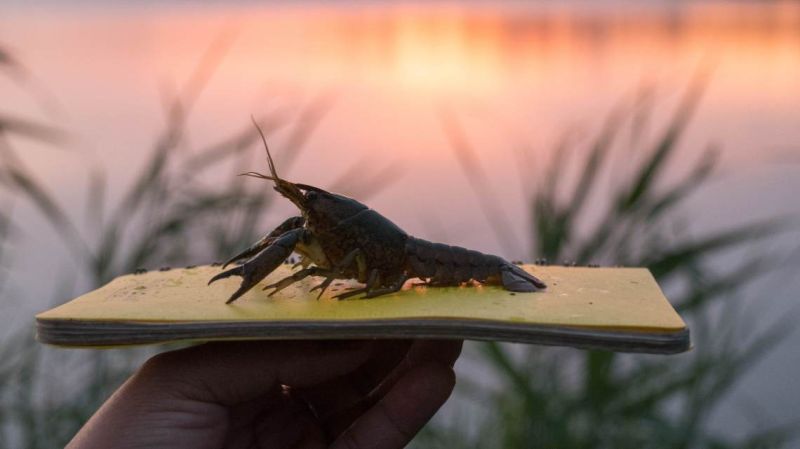
The marbled crayfish is a wonder of nature. This insect-like sea creature is unnaturally hardy, was born out of the pet industry, and-strangest of all-it can clone itself, unlike any other species of crayfish.
Some aquarium enthusiasts keep crayfish, also known as crawfish, crawdads, freshwater lobsters, and mudbugs, as pets in home aquariums. They are relatively easy to keep and come in a variety of colors. One day in the 1990s, possibly in an aquarium in Germany, something strange happened.
Normally, a crayfish gets one set of chromosomes from its mother and one from its father, just like humans. However, one crayfish was born with two sets of chromosomes in its reproductive cells, so the offspring got one set from one parent and two from the other parents. The result was a female crayfish that was “triploid,” meaning it had three sets of chromosomes.
Typically, such duplication would result in serious health issues for the animal. However, for odd some reason, the resulting creature was strong and not prone to illness. Her extra chromosomes also made her able to reproduce without a male-making hundreds of clones of herself. In turn, those clones could clone themselves, and so on, forever. Researchers at the German Cancer Research Center later published a paper on the bizarre behavior and rapid spread of the marbled crayfish, also known as marmokrebs.
This super-power is fascinating to observe for pet owners and biologists. However, it’s concerning for conservationists.
The issue started in the pet industry. Although it’s hard to pin down the exact first time a marbled crayfish was born, one hobbyist may have had some of the first of the species. He noticed how big his pet was, and how she laid so many eggs in comparison to the other crayfish pets people had. He started giving away the offspring to his friends, who were puzzled by the creatures. They would all lay lots of eggs without even mating. Soon, the pet-owners dumped their surplus crayfish in waterways.
It’s usually a bad idea to dump your pet in the wild. It either won’t survive because it’s not used to hunting or escaping predators, or it may take over the ecosystem as an invasive species. The crayfish lived, thrived, and reproduced like wild. Now there are populations of marbled crayfish all over Europe!
The population of these animals is exploding, but there is a reason that so few animals reproduce by self-cloning. Since all of their DNA is identical, one change in the environment, or one disease, could wipe out all of them. Will that happen, or will the marbled crayfish live on and take over the world?
→
From Globe, For Globe - Pulse of the Planet
You can visit a crystal-clear lake in Oregon that’s literally frozen in time!
What lies beneath the surface of the crystal clear waters of the appropriately named Clear Lake of Sisters, Oregon?
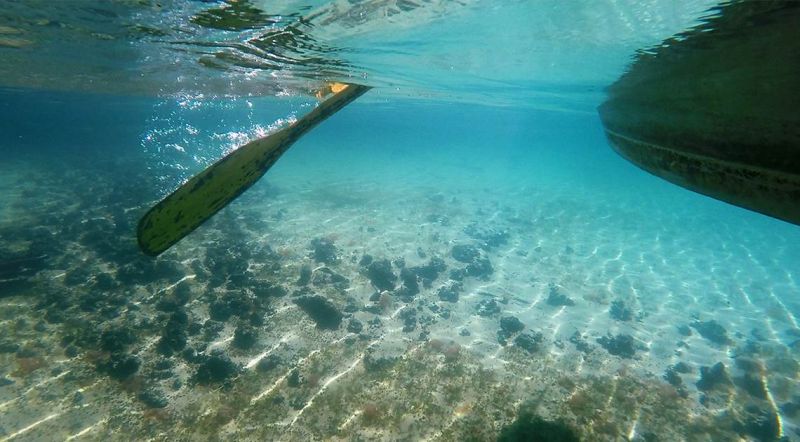
Turns out there aren’t very many mysteries. After all, the lake is so clear you can see just about everything. Including its famous underwater forest.
That’s right-sitting just under the 148-acre lake, which is named for its amazing transparency, is an ancient forest, with 80-foot tree trunks once drowned in a flood, now kept petrified by the water’s cold temperatures.
Seeing Clearly
Discovered in 1859 by explorers trying to find a way through the Cascade Mountains, they made their way along an Indian Trail.
“Hiking the Clear Lake Trail is an incredible way to experience this unique Cascade lake,” writes Halvor Tweto of the Outdoor Project. “Leaving from the Clear Lake Resort trailhead, a counter-clockwise walk around the lake provides views of Three-Fingered Jack, the McKenzie River Headwaters, the Sand Mountain Lava Flow that created the lake, the springs that feed the river, and a surreal perfect image of the Three Sisters (volcanic peaks) perfectly framed in the lake’s waist.
“Add to this the constant presence of clear, sapphire water and the ghostly, underwater figures of a forest long submerged, and you’ve found one of the best walks in the Cascade foothills,” he continued.
Brian Carroll, Linn County Parks and Recreation director, told Travel + Leisure that some see it as a spiritual place.
“To me, Clear Lake has a very spiritual effect on people…when you get there it just comes across as magical,” he said.
“You’ve got it all, the mountains are there, the forest is there, and there’s lava; there’s just so many different abnormalities about the area because you’re surrounded by all this volcanic terrain.”
FROZEN IN TIME
Sitting at an altitude of more than 3,000 feet, scientists note that the lake has an area temperature just above freezing year-round. This keeps the underwater world in a nearly frozen state, and some divers take advantage by exploring through the branches.
Surrounded by five miles of trails in the Willamette National Forest, Clear Lake offers cabins and relaxation, campfires, and picnic tables. “(It) is considered one of the best spots for freshwater diving in America,” writes Jen Anderson, of TravelOregon.com.
Which really begs the question: Why wouldn’t you want to check this out?
Just a few hours away from major cities like Portland, Salem, and Bend, you’re pretty much off the grid when you’re in the National Forest, driving down Highway 126. Scuba enthusiasts can jump in the lake and explore the underground forest, and because no motorized boats are allowed on the water, it’s peaceful and calm for those who want to kayak, row, or paddle.
→

Referred by ripleys.com - where the world’s most extraordinary stories are discovered and celebrated.