


McDonald’s Food Doesn’t Rot… Or Does It?

From Nation, For Nation - Pulse of the Nation

Believe It or Not! Total Solar Eclipse Captured for Ripley’s Exhibit Collection

Is Shuffle Random? Why You Wouldn't Want It To Be
Is Shuffle Random?
You probably know about the shuffle feature if you use Apple Music or Spotify. Many people enjoy using shuffle to sift through their music. Getting random songs to play at different times (random being the key word here). But in truth, what we think of as a random shuffling of songs isn’t actually what we’re getting.
Press Shuffle Again
Many consumers have complained about the issue that occurs with with streaming services. Where the songs they listen to on shuffle play in the same order every time. It can be annoying for people who pick shuffle to have their playlist play songs in a different order each time.
Fortunately, there is a way to fix this. Whether you’re listening to music on Spotify or somewhere else, hit that shuffle button, turning the feature off. Hit the button again, turning it back on. Your playlist should start to play in a different order.
When you turn on shuffle the first time, the songs will keep playing in the same order, over and over. Unless you choose to reshuffle them. This is because shuffle puts your songs in a specific order that won’t change unless you tell it to. You’re welcome.
Musical Conspiracy?
However, those who look deeper into the random shuffle issue often feel they can see patterns in their playlists. Even when they’re supposed to be hearing songs played at random.
Some may notice the same artists coming up again and again. While others will notice songs that sound similar being played back-to-back. Still, others believe in a conspiracy that Spotify has made deals with certain artists to ensure their songs play more often.
Spotify has denied any of these allegations, and actually, there is a much more likely explanation for why we see these conspiracies. Humans are always looking for patterns and designs in order to make better sense of the world. The truth is you should chalk these instances up to coincidence. For example, a certain song could be played every time you put your playlist on shuffle, simply because it has as good a chance as any other song of being played.
True random will exhibit clumps, whereas people often expect random to mean perfectly equal distribution.
Is Your Playlist Shuffled Randomly?
The funniest thing is that your playlist actually isn’t completely random, especially if you’re using Spotify, and the reason for it is that people didn’t think random was random enough. Mattias Petter Johansson, a former Spotify engineer, said the company used to have a completely random shuffle algorithm. However, they received many complaints about non-random results, which were actually just coincidences. So, Spotify decided to develop a new algorithm that seemed more random to people.
Therefore, it’s true that your shuffle isn’t really playing your songs at random. But you wouldn’t really like it if it were.
→
From Globe, For Globe - Pulse of the Planet
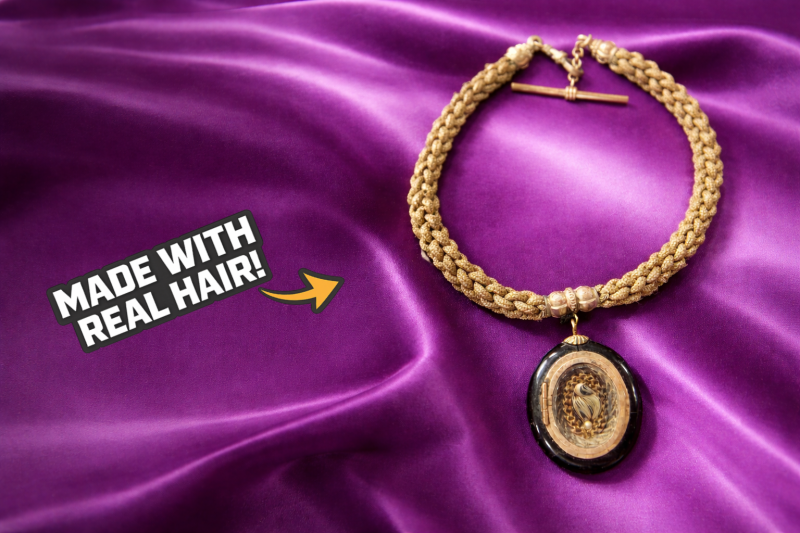
From the Victorian era to Zen Hansen's extraordinary art!
Throughout history, hair has been used for more than just hairstyles. For centuries, people have turned human hair into intricate works of art, braiding it into jewelry, keepsakes, and decorative designs to be passed down for generations.
Hairy History
This unique craft is called hairwork, and it was especially popular in the 1800s. Artists would carefully braid and weave strands of hair into rings, bracelets, lockets, and detailed patterns using specialized tools and techniques.
Because hair is thicker and stiffer than fibers like cotton or wool, it’s often better suited for braiding, allowing artists to create surprisingly durable designs.
Although the practice nearly disappeared, a few modern artists are helping to bring it back.
Keeping The Craft Alive
One of these artists is Zen Hansen of Rigby, Idaho, who is reviving historic hairwork using traditional table braiding methods.
When she began learning the craft in 2019, she discovered that the most recent instructional book on hairwork had been published in 1867. Today, Zen researches the history of the craft, develops modern tools, and creates intricate pieces using hair from herself, family members, and clients.
You can learn more about Zen Hansen and other incredible talents in Ripley’s Believe It or Not! Seek the Strange, Ripley’s latest annual book.
Wait... You Want More?
Ready to discover more of the unbelievable? Visit a Ripley’s Believe It or Not! near you and start your journey to seek the strange!
→

Referred by ripleys.com - where the world’s most extraordinary stories are discovered and celebrated.